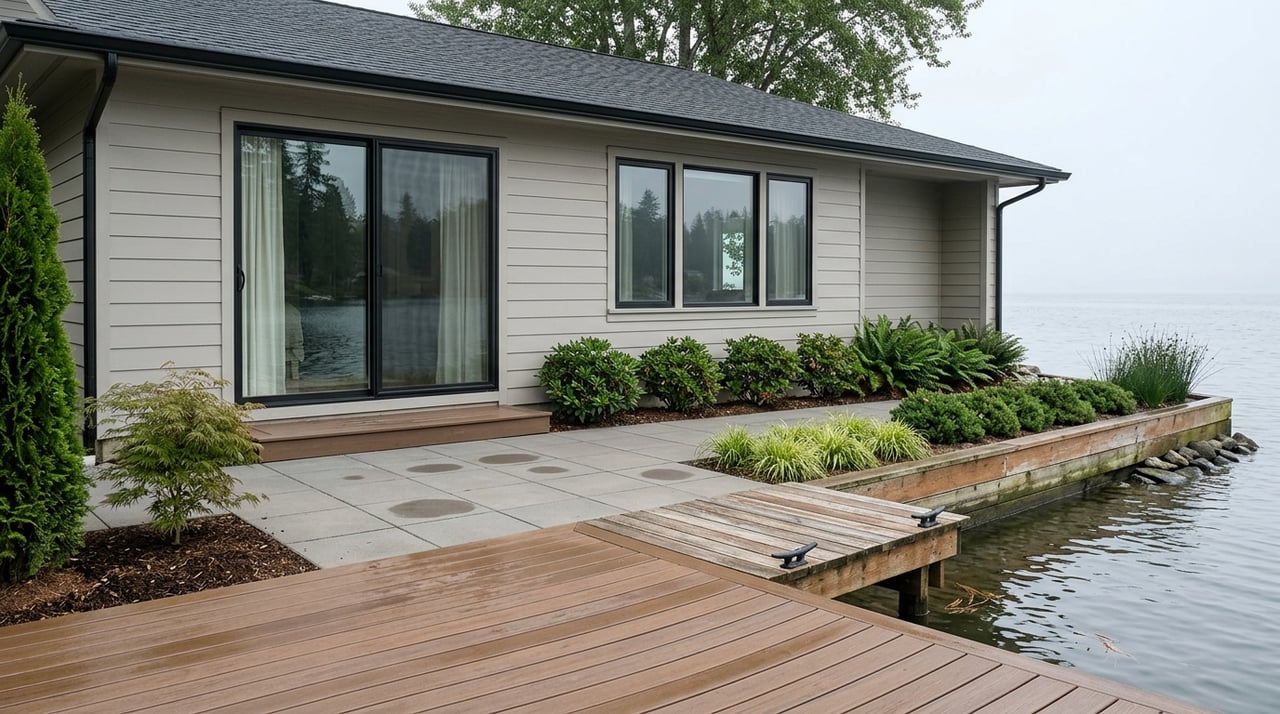
Dreaming about waking up to lake views and stepping out to your own dock? Lake Stevens waterfront living can be a great lifestyle fit, but it comes with a different set of costs, rules, and property questions than a typical home search. If you are considering buying on the lake, it helps to understand how pricing, shoreline regulations, and insurance can affect both your budget and how you use the property. Let’s dive in.
Lake Stevens waterfront market basics
Lake Stevens is still mostly a detached single-family home market. According to the city’s 2024-2044 Comprehensive Plan, 81.2% of the housing stock is detached single-family, and the 2023 median home sales price was $755,000.
That broader city market gives you important context, because waterfront homes are a smaller niche within it. More recent 2026 snapshots place the overall Lake Stevens market in the high-$600,000s to mid-$700,000s depending on the source, with Redfin reporting a February 2026 median sale price of $683,000 and Zillow showing an average home value of $690,193 and a median list price of $708,167.
Waterfront inventory tends to be much tighter and much more varied in price. On April 12, 2026, active waterfront listings in Lake Stevens ranged from $649,800 to $2,799,995 in Zillow’s Lake Stevens waterfront search. That spread tells you something important: on the lake, price is often driven by more than square footage alone.
What drives waterfront pricing
When you compare two Lake Stevens waterfront homes, you may see a big price gap even if both sit on the lake. In practice, factors like frontage, dock access, lot size, home condition, and how usable the shoreline is can have a major effect on value.
For example, one property may offer low-bank access, a sandy beach area, and a private dock, while another may have older improvements or a shoreline setup that changes how easily you can use the water. That is why it helps to look beyond the view and ask how the property actually functions day to day.
For many buyers, the real question is not just, "Is it waterfront?" It is, "How usable is this waterfront for the way I want to live?"
Lake lifestyle comes with lake rules
Part of the appeal of Lake Stevens is the recreation. But if you plan to boat, paddle, or spend a lot of time on the water, it helps to understand the city’s rules before you buy.
According to the city’s Water Recreation Program, boating on Lake Stevens runs counter-clockwise, the speed limit is 35 mph, and boats must yield to non-motorized users. No-wake or 8 mph limits apply within 100 feet of swimming areas, structures, floating objects, and the lake safety area around docks.
The city also places safety markers about 100 feet from docks to show the no-wake zone. If your dream home includes boating, wake sports, or frequent dock use, these rules are part of how the property will feel in real life.
Shoreline rules buyers should know
One of the biggest surprises for waterfront buyers is that shoreline regulation does not stop at the water’s edge. In Lake Stevens, the city’s Shoreline Master Program applies to the lake and shorelands within 200 feet of the ordinary high-water mark.
That matters because a shoreline permit is generally required for new, expanded, or replaced development within shoreline jurisdiction. So if you are thinking about future changes like replacing a dock, improving a shoreline feature, or expanding an existing setup, you should assume review is part of the process.
This is one reason waterfront due diligence needs to go deeper than a standard home search. A beautiful lot may still come with limits on what you can change later.
Dock rules can affect value and use
Docks are often a major part of a waterfront home’s appeal, but they are also regulated improvements. The city’s shoreline rules allow no more than one pier per single-family residence or private recreational lot.
The rules also prohibit new floating docks within the first 30 feet of shoreline unless they sit in at least six feet of water. Dock walkway width is limited to 4 feet in the first 30 feet and up to 6 feet farther out.
New dock length is capped based on neighboring legal docks or the depth needed to reach moorage, with an absolute maximum of 200 feet from shore. The city also prohibits new boathouses and other enclosed covered moorage, according to the Shoreline Master Plan updates.
Repairs and replacements are regulated too
Even if a dock already exists, that does not mean future work will be simple. The same shoreline rules require new docks to use decking with at least 40% open space within 30 feet of shore, and major repairs or replacements may need to meet updated standards for decking and materials.
In some situations, alternative dock designs may also require Washington Department of Ecology shoreline review guidance and additional state-level involvement through local shoreline administration. The practical takeaway is simple: a dock is not just an accessory. It is a regulated shoreline feature that can affect both your costs and your long-term plans.
Insurance can change affordability fast
Waterfront buyers often focus first on the purchase price, but insurance deserves early attention too. The Washington Office of the Insurance Commissioner says standard home, renter, and commercial policies usually do not cover flood damage, and FEMA also notes that most homeowners insurance does not cover flood.
If a property is in a high-risk flood area and you are using a government-backed mortgage, flood insurance is required. FEMA also says NFIP flood policies typically have a 30-day waiting period unless coverage is tied to a government-backed loan or certain map changes.
That is why it is smart to verify the exact parcel using FEMA’s Flood Map Service Center. A waterfront address may have a very different insurance profile from another property just a short distance away.
Slope and land movement matter too
If the lot is near a bluff, slope, or drainage-sensitive area, ask about land movement exposure as well. According to the Washington Office of the Insurance Commissioner’s landslide insurance guidance, homeowner insurance usually does not cover damage from land movement or landslides caused by rain, melting snow, flooding, or earthquakes.
For Lake Stevens buyers, this matters even when the home appears well above the shoreline. Drainage, slope conditions, and lot layout can all change the risk picture.
The bottom line is that insurance costs can materially affect affordability. Getting quotes for homeowners, flood, and if needed landslide-related coverage early can help you make a clearer decision before emotions take over.
Due diligence questions to ask
When you tour a Lake Stevens waterfront home, it helps to keep your questions focused on the issues most likely to affect value, use, and future costs. The city’s shoreline framework and state shoreline review process make a few questions especially important.
Here is a simple checklist to bring into your search:
- Is the parcel within shoreline jurisdiction?
- Is the parcel in a mapped flood area?
- Is the dock permitted, legal, shared, or nonconforming?
- What dock or shoreline repairs and replacements have already been completed?
- Can the dock still function during lower water conditions?
- What do current quotes look like for homeowners, flood, and possibly landslide-related coverage?
These questions can help you compare properties more realistically. They also make it easier to spot the difference between a home that is simply on the water and a home that truly fits your budget and lifestyle.
How to buy with confidence
Buying waterfront in Lake Stevens can be incredibly rewarding, but it works best when you go in with clear expectations. Pricing can vary widely, shoreline rules can affect future improvements, and insurance can change your monthly costs more than you expect.
If you are considering a lake property, I recommend looking closely at how the home will function for your everyday life, not just how it looks on showing day. That means understanding the dock, reviewing shoreline and flood questions early, and comparing the property against the broader Lake Stevens market instead of regional headlines.
If you want practical guidance on buying in Lake Stevens and a direct read on how a waterfront home fits your goals, connect with Sam Burke. You will get local insight, hands-on support, and straightforward help as you sort through your options.
FAQs
What makes Lake Stevens waterfront homes cost more than other local homes?
- Waterfront pricing in Lake Stevens can be influenced by frontage, dock access, lot size, shoreline usability, and property condition, not just the size of the house.
What should Lake Stevens buyers know about dock rules?
- Buyers should know that docks are regulated by shoreline rules, including limits on pier count, dock length, walkway width, and certain design features like enclosed covered moorage.
Do Lake Stevens waterfront homes need flood insurance?
- Some do, especially if the parcel is in a high-risk flood area and the buyer is using a government-backed mortgage, so you should verify the exact property on FEMA’s mapping tools and get quotes early.
What permits matter for Lake Stevens shoreline properties?
- Shoreline properties may require city review for new, expanded, or replaced development within shoreline jurisdiction, and some projects may also involve state-level shoreline permitting or approvals.
What due diligence matters most when buying Lake Stevens waterfront property?
- The most important items are shoreline jurisdiction, flood-map status, dock legality and condition, prior shoreline work, low-water dock function, and insurance costs.